

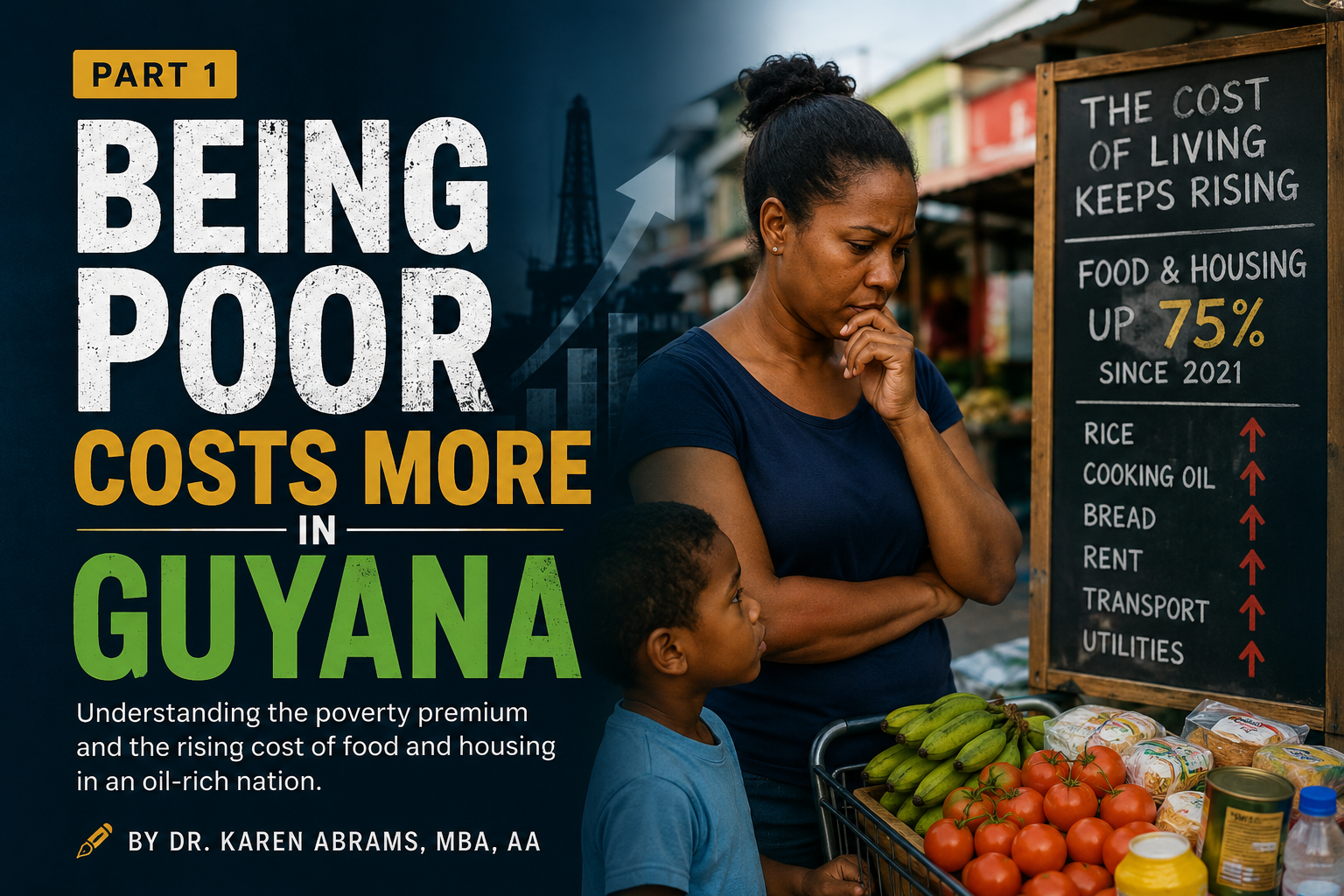
By Dr. Karen Abrams, MBA, AA
Here is one of the cruellest facts in all of economics, and once you see it, you will see it everywhere: it is expensive to be poor.
The international research is unambiguous. The University of Bristol’s Personal Finance Research Centre, which has studied this issue extensively, found that nearly three-quarters of households in poverty pay what researchers call a poverty premium, meaning they pay more than better-off households for exactly the same goods and services.
Anyone who has spent time among low-income communities in the United States will recognize how relentless the poverty premium can be. Many people operate without bank accounts and pay fees simply to cash their paychecks. Those attempting to rebuild damaged credit are often offered “second chance” credit cards with high fees, low limits, and interest rates far above those available to wealthier borrowers. Families without reliable transportation frequently shop at small neighborhood stores within walking distance, where prices are often higher than at large supermarkets. When emergencies arise, many have little choice but to turn to payday lenders, rent-to-own arrangements, or informal lenders charging extraordinary rates.
The details differ from country to country, but the pattern remains remarkably consistent. Poverty creates barriers, and those barriers carry a price.
Closer to home, Guyanese will recognize the local versions of this reality.
The household purchasing food in the smallest quantities often pays more per unit than the household that can afford to stock up. The family without access to reliable transportation spends more time and money reaching jobs, schools, health care, and government services. The person without savings pays a much higher price when an unexpected expense arrives. The household without insurance absorbs the full cost of flooding, theft, illness, or damage when misfortune strikes.
Add these costs together across months and years and the result is a substantial invisible surcharge that many Guyanese pay simply because they have fewer resources to begin with. The tragedy is that this surcharge rarely appears on any receipt. It is spread across dozens of small disadvantages, each seemingly insignificant on its own, but collectively powerful enough to keep families from getting ahead.
The poverty premium also presents an uncomfortable contradiction for modern Guyana.
We are living through one of the most extraordinary periods of economic growth in our history. Oil revenues continue to rise. New buildings reshape our skyline. Investment announcements dominate the headlines. Yet many ordinary families still face structural disadvantages that make daily life more expensive than it needs to be.
The challenge is not merely poverty. It is poverty amid rapidly rising living costs. Earlier this year, The Economist observed that the cost of food and housing in Guyana has increased by 75 percent since 2021. For families whose incomes have not risen at the same pace, every trip to the market and every rent payment consumes a larger share of household income.
Rising prices affect everyone, but they do not affect everyone equally. Wealthier households may postpone a purchase, reduce discretionary spending, or draw upon savings. Poor households often have no discretionary spending left to cut.
Economic growth is important, but growth alone does not eliminate the poverty premium. If the cost of living rises faster than incomes, many citizens may continue to bear costs that wealthier households can more easily avoid.
The poverty premium does not merely affect household budgets. It shapes lives. And that is where the discussion must go next.