



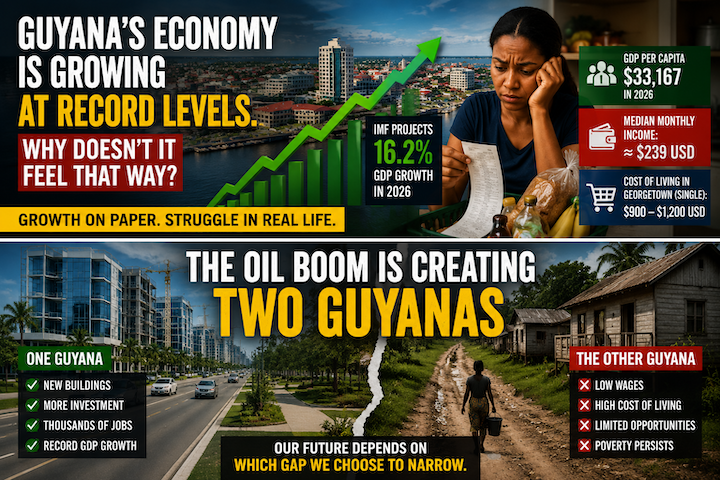
Drive through parts of Georgetown today and it is impossible to miss the signs of prosperity.
New hotels are rising. Office buildings are under construction. Luxury vehicles fill the roads. International companies continue to establish a presence in the country.
Yet travel beyond the centres of oil-driven activity and a different Guyana emerges.
Many families continue to struggle with low wages, high living costs, unreliable transportation and limited economic opportunities. In hinterland and rural communities, poverty remains a significant concern despite years of record national growth.
The contrast highlights a growing concern among economists and social observers: the emergence of two Guyanas.
One Guyana is experiencing the benefits of oil wealth directly through contracts, employment opportunities, business partnerships and investment activity.
The other continues to face many of the same challenges that existed before first oil.
This growing divide is reflected in the numbers. While GDP per capita now exceeds US$33,000, median monthly earnings remain roughly US$239. Meanwhile, housing costs and food prices continue to rise.
The challenge for Guyana is not simply producing more oil. It is ensuring that oil wealth produces a stronger middle class, broader business ownership, better public services and greater opportunities across all regions of the country.
The success of Guyana’s oil era will ultimately be measured not by the number of barrels produced, but by whether the gap between these two Guyanas narrows or widens in the years ahead.