

Returning Home, Meeting Resistance
By Diaspora Business Daily
For years, Guyana’s leaders have urged members of the diaspora to return home, invest, and help build the country’s future. Government officials routinely speak of the country’s economic transformation, fueled by oil wealth and unprecedented growth, while calling on overseas Guyanese to bring their capital, expertise, and entrepreneurial spirit back to the land of their birth.
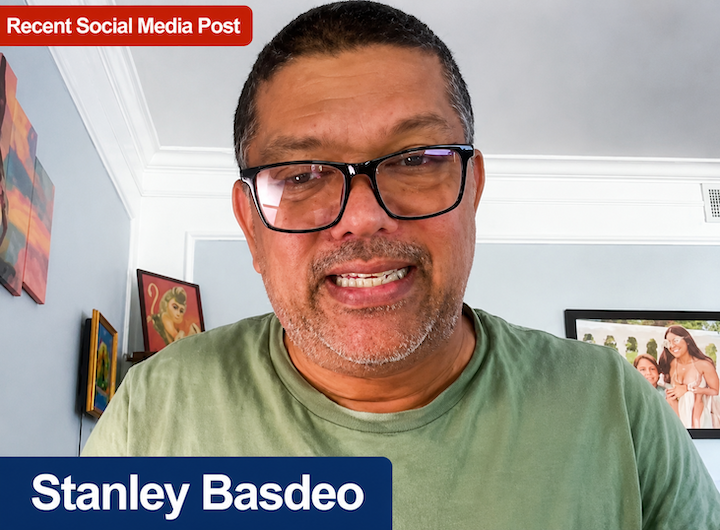
Yet for businessman Stanley Basdeo, the reality of doing business in Guyana has been far more complicated.
Basdeo, a Guyanese entrepreneur who returned with the intention of investing and creating opportunities, has publicly detailed a series of experiences that he says expose deep inefficiencies, excessive costs, bureaucratic hurdles, and allegations of corruption within several state agencies and entities involved in commerce and trade. His comments have resonated with many other business owners who, according to him, are often reluctant to speak publicly for fear of reprisals.
According to Basdeo, the challenges include struggles of importing containers and vehicles. He described paying an $80,000 security bond related to a container transaction and says that despite complying with all requirements and timelines, his company has still not been refunded nearly a year later. He also recounted conversations with another businessman who allegedly paid $150,000 in additional charges after a truck became stuck while retrieving a container.
The businessman also spoke of repeated difficulties with government agencies, including delays in processing vehicle registrations and transfers, misplaced documentation, and an inability to obtain timely responses from senior officials. He described the process as financially and emotionally draining for entrepreneurs trying to operate legally and transparently in Guyana.
Most serious, however, are Basdeo’s allegations concerning corruption. He claims that during efforts to obtain a firearm licence, an individual allegedly demanded money from him and that corrupt practices are widely known but insufficiently addressed. He contends that people who raise concerns often face hostility rather than solutions.
Basdeo’s name previously made national headlines after he publicly alleged that he had been solicited for a bribe, an incident that ultimately resulted in his arrest and sparked widespread debate over freedom of expression, whistleblowing, and the treatment of citizens who report alleged wrongdoing. The matter drew significant public attention and further intensified concerns about whether ordinary Guyanese and investors can safely raise allegations of misconduct without fear of repercussions.
His latest remarks have struck a chord because they touch on an issue that extends well beyond one businessman.
For decades, Guyana has suffered from one of the largest rates of outward migration in the Caribbean. Hundreds of thousands of Guyanese reside in the United States, Canada, the United Kingdom and elsewhere, many of them highly educated professionals and successful entrepreneurs. Successive governments have repeatedly appealed to this diaspora to return and contribute to national development.
The country’s need for diaspora involvement has become even more pronounced during the oil era. Guyana faces shortages of skilled labour, experienced managers, investors, and technical professionals. Returning Guyanese possess precisely the kinds of expertise that the country needs to build competitive industries beyond oil, strengthen institutions, and develop sustainable businesses.
However, economic growth alone is often not enough to attract and retain investment.
Diaspora investors frequently cite concerns about bureaucracy, inconsistent regulations, high transaction costs, delays in government services, and fears of corruption. Many say they want predictable systems, efficient institutions, and confidence that they will be treated fairly regardless of political affiliation or social connections.
Basdeo’s experience therefore raises a larger question: Can Guyana successfully encourage its sons and daughters to return home if the systems they encounter make doing business difficult and frustrating?
The government’s vision of a prosperous and diversified economy depends heavily on private investment and entrepreneurship. But investors, whether local or from the diaspora, need more than patriotic appeals and glowing economic statistics. They need institutions that work efficiently, processes that are transparent, and confidence that grievances can be addressed without intimidation.
As Guyana continues its historic economic expansion, the experiences shared by Stanley Basdeo serve as a reminder that development cannot be measured solely by towering buildings, large infrastructure projects, or impressive GDP growth figures. It must also be measured by whether ordinary citizens and returning Guyanese can navigate public institutions fairly, efficiently, and with dignity.
The promise of “coming home to build Guyana” will ultimately succeed not only because the country has oil, but because the country creates an environment where those who return feel welcomed, protected, and empowered to contribute to its future.
If you would like to upload an image for editing, please provide the file or describe the changes you want made, and I will assist you.
I can also prepare this as a more investigative newspaper feature with quotes, background on Guyana’s diaspora policies, and data on migration and return investment trends.